My trip to this beautiful place was for a Self Guided Discovery Experience for two, that I’d been gifted as a birthday present last year. I didn’t have the hassle of deciding who to take with me and my fellow Gin obsessed friend, Vicki, was my only choice. No one else understands my love of the clear stuff and Vicky has been my gin buddy since we both started enjoying it.
Our experience started off on a nice rainy day in March, which after walking aimlessly around the grounds trying to find the reception area we were a little damp. So first impressions, not to great when the reception area was not clearly sign posted. As you have to pre-book your chosen tour, your tickets are collected on arrival. Alongside our tickets we received a very well thought out map of Laverstock Mill along with history about Gin and Laverstock itself to take away with us. Once a few more people arrived within the reception area for the same tour as us, one of the visitor team gave us all a brief on what to expect, ow to get the most out of our self guided tour and where to find information.
History
The first part of our
tour was based on the history of both Laverstock Mill and Bombay Sapphire. There were six audio points dotted over Laverstock Mills, each one with a new and great bit of information. Point one told us about the history of the grounds.
The first record of this amazing place was documented in the Doomsday Book of 1086. How amazing is that? Used both as a corn mill and paper mill in the past, Bombay Sapphire saw an opportunity to renovating the once derelict site into the distillery and visitors centre it is today. Renovations started in 2011 after Bacardi wanted a new site for Bombay Sapphire due to a fire at the original distillery.
Point two informed us about India House the part of the Mill made in the 20th Century as a paper mill. It now owns Bombay Sapphires two biggest vapour infusion stills called Victoria and Henry. These two stills can produce up to 12000 litres of gin. Now that’s a lot of gin, but when you think of how much is sold world wide over a year, you can imagine how much these bad boys get used!
Point Three took us through the history of Gin and how Bombay Sapphire fits into this. The DNA for the original Bombay London Dry Gin dates back to 1761 by the first UK born gin distiller Thomas Dakin. Bombay London Dry Gin only started out in the gin scene in the 1900’s though and Bombay Sapphire is so recent with it only now being 33 years old. So a very young gin for such a big brand.
Point four was sadly closed so we had to skip this one, but it would of been the gallery with a full history of how Bombay Sapphire came about.
Point five was about the surroundings of Laverstock Mill, sadly we were unable to see any of the wildlife due to the weather, but that didn’t matter as the place is the best of natures beauty anyway. It’s a perfect spot to sit and take in the sense of how this place would of run, seeing the wildlife flutter by and hearing the sound of the river and mill working. Obviously that is me imagining all of that, but that’s something I find easy to do when I find somewhere like this.
The last point was about the still house and the botanical dry room. Yes there are two still houses on site, this one is open as part of the tour. I won’t spoil these two things just yet though.
The Glass Houses
Out of all the distilleries here in the UK, the reason why this one was top of my list is not only because it made so locally to Dorset, but the two massive Glass Houses that bring this place to life. Situated on the River Test itself and designed by Thomas Heatherwick. The idea was to try and keep the existing site structure as much as possible and to make it a suitable and eco friendly distillery. These two glass houses may not be part of the original building but hot air is channelled into the glass houses through large pipes clad in strips of metal, which pick up heat produced during the distillation process. it is then carried out through openings in the red-brick walls of one of the existing buildings. Therefore the heating of the houses is organic in the sense its heats used from another process within the distillery.
The two glass houses host the 10 botanicals used within Bombay Sapphire. so what are they? Juniper, Cassia Bark, Grains of Paradise, Angelica Root, Liquorice Root, Almond, Orris Root, Cubeb Berries, Lemon Peel and Coriander. There is information dotted around each house about the botanicals held in each one. It’s amazing how all of them were used in medicine and still are for those practising herbal medicine. (Please note that herbal medicine isn’t always safe and ensure you speak to a someone who specialising in it before experimenting yourself) Most of the botanicals used in gin were used to treat respiratory infects. Now Vicki and I had a little chuckle as we said our gin collection may go down quite rapidly if this is the case. Why? Well we went on our experience two weeks before the Covid 19 lockdown took place in the UK. So the comment was quite appropriate for the current situation we are all facing.
Botanical Dry Room
I felt as if I was going into Willy Wonka’s chocolate factory when entering this magical room. On entering one of the visitor guides handed us a card which would help us choose a cocktail at the end of the experience and explained to us how to use the room to it’s full potential. The cards we were given had 22 numbers dotted around the outside, a botanical each number falls under and a group of taste for each botanical. The aim of the botanical room is to go around a smell each one of the 22 different botanical within the room and punch a whole in which number fits in with your senses. Now before I started this I no I go for more citrus and spicy based gins. This experience actually surprised me with what I’d chosen on just smell alone. So what did I chose did I hear you ask? Now I can only give you an idea as I can not for the life of me remember exactly which type of the botanical I chose. Each one had a two or more numbers and a different scent to each. Therefore I can tell you I chose; Juniper no.2, Grains of Paradise no.7, Liquorice Root no.12, Lemon Peel no.20 and Coriander no.21. Most of the botanical I chose fall into the citrus category and therefore proved why I got for more citrus based gins. Funny enough Vicky also matched with my botanicals, says it all really.
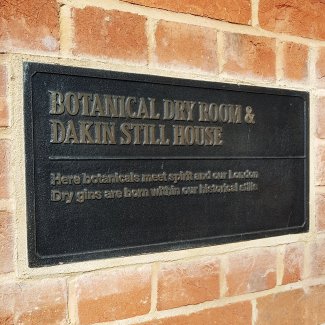
Dakin Still House
Named after one of the most iconic families in British Gin history, the Dakin Still House is home to Mary and Thomas, another two vapour infusion stills. Made from copper, as are Victoria and Henry, these stills have changed throughout the years. Thomas has had many parts changed, but is still classed as one of the oldest stills. Mary is slightly newer and was one of the first vapour infusion stills around. Why are vapour infusion stills used? They are a lot safer than what were used when the gin makers would get children to jump into the stills and clean them out by hand. Why children? They were the smallest humans to get into the stills to be able to do the job. You’ll understand if you’ve ever seen the opening to one.
This was the only part of our experience which was guided. A background, understanding of how the stills work, how the gin is shipped out and what is used took place within a 15 minute tour. Both Thomas and Mary are still used alongside their counter parts in India House and they both can produce up to 3000 litres on top of what Henry and Victoria can produce.
Did you know that there are only two people in the world who know the Bombay Sapphire recipe? Neither of them are allowed to be in the same place at the same time just in case something were to happen. Imagine having all that responsibility.
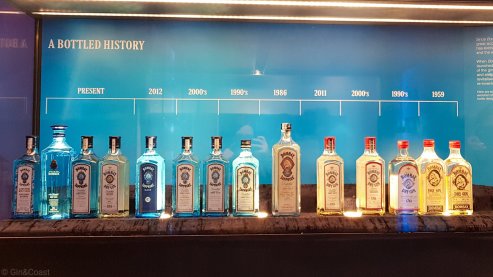
The Bar
With the experience during to an end it was time to use our botanical cards to get a cocktail of our choice at the bar. I was designated driver, so for us lucky ones we could have a mocktail and get a complimentary gin and tonic to take home. Vicky tried to pull a fast one by doing the same, safe to say I wouldn’t let her come all this way without getting a cocktail made in the Bombay Sapphire bar!
I opted for the Pineapple Shake – pineapple juice, ginger & lemon grass cordial, lime wedge and rosemary sprig. A refreshing summery mocktail with a hint of spice. Just how I like me gins!
Vicki opted for The Laverstock (winter edition) – Bombay Sapphire, MARTINI Rosso, St Germain Elderflower Liqueur, lime wedge, ginger ale and rosemary sprig. Of course I had a sip! This was a part cocktail in the making and something I’d like to try making at home. I love gin and ginger ale together and with the added components it made for a great end to the experience.
The bar area itself is somewhere I could sit for a while to reflect on the day. With three different seating areas to choose from, we chose to sit at the top, overlooking the amazing bar underneath and watching the barmen and women mix the cocktails.

Pineapple Shake

The Laverstock
Overview
This is one gin distillery I will not forget in a hurry and I’m sure not many will beat this. With history, wildlife, a magical room and great cocktails, £15 has gone a long way. Is it worth the money? Of course it is! You’d be pushed to find any experiences priced like this where you can enjoy the visit at you own pace. Just remember you put in what you’d like to get out of it. Even though Vicki and I went on a rainy day, it didn’t spoil they way we saw the place and what we got out of it. Do I want to go again? Hell yeah! I can not wait to book on to another experience and let you guys no what it’ll like.
Dates – Open 7 Days a week (tickets must be brought in advance, not all experiences run Mon-Sun)
Price – £15 – £150 depending on experience brought
Address – Laverstock Mill, Witchurch, Hampshire RG28 7NR



 ginandcoast.co.uk